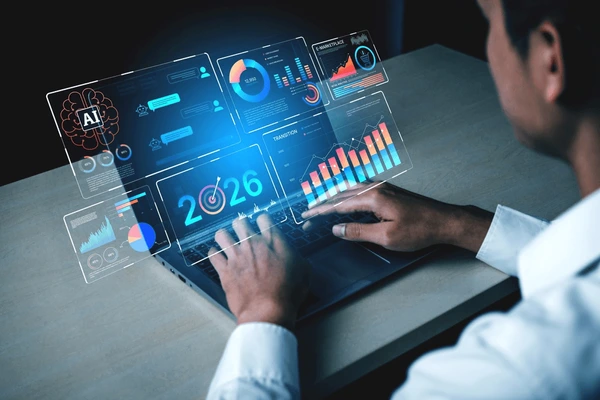
Big Data, Big Profits: How U.S. Firms Leverage Analytics (2026 Outlook)
In 2026, data is the new currency driving innovation, efficiency, and profitability across U.S. industries. Companies are no longer just collecting data—they are extracting actionable insights, predicting market trends, and optimizing operations at unprecedented scale. From retail and finance to healthcare and manufacturing, big data analytics is transforming business models and competitive strategies.
This article explores how U.S. firms harness analytics to turn vast datasets into tangible business value.
1. The Rise of Big Data in U.S. Business
Big data refers to high-volume, high-velocity, and high-variety information generated by digital interactions, IoT devices, social media, and enterprise systems. Its relevance to U.S. firms includes:
- Customer Insights: Understanding preferences, behavior, and sentiment.
- Operational Efficiency: Optimizing processes, reducing waste, and improving productivity.
- Risk Management: Identifying potential market, financial, and operational risks.
- Innovation & R&D: Informing product development, pricing strategies, and market entry.
Observation: Data-driven companies consistently outperform competitors in revenue growth, efficiency, and customer engagement.
2. Key Industries Leveraging Analytics
a. Retail & E-Commerce
- Predictive analytics forecast consumer demand and personalize recommendations.
- Dynamic pricing adjusts in real-time based on trends and inventory.
- Supply chain analytics optimize logistics, reduce costs, and prevent stockouts.
Example: Platforms like Shopify and Walmart integrate AI-driven analytics to enhance customer experience.
b. Finance & Banking
- Fraud detection and risk modeling use machine learning.
- Investment firms leverage predictive analytics for portfolio optimization.
- Real-time analytics support decision-making in trading, lending, and compliance.
Example: Goldman Sachs and JPMorgan Chase deploy big data for AI-driven trading and risk management.
c. Healthcare & Biotech
- Patient data and genomic information inform personalized medicine.
- Predictive models forecast disease outbreaks and optimize hospital resource allocation.
- AI-assisted drug discovery accelerates R&D cycles.
Example: Pfizer and Moderna use analytics to enhance clinical trials and product development.
d. Manufacturing & Logistics
- IoT sensors monitor equipment and predict maintenance needs.
- Supply chain analytics reduce bottlenecks and enhance delivery speed.
- Process optimization minimizes downtime and maximizes efficiency.
Observation: Analytics turns operations into predictive, agile, and cost-efficient systems.
3. The Analytics Technology Stack
Modern U.S. firms leverage a multi-layered technology ecosystem:
- Data Collection & Storage: Cloud platforms like AWS and Microsoft Azure provide scalable data storage.
- Data Processing & Integration: Tools consolidate structured and unstructured data for analysis.
- Machine Learning & AI: Models identify patterns, correlations, and predictions.
- Visualization & BI Platforms: Dashboards and interactive reports enable executive decision-making.
Implication: Sophisticated technology infrastructure is essential to extract value from big data.
4. Predictive Analytics & AI
- Forecasting Trends: Predict consumer demand, stock movements, or supply chain disruptions.
- Recommendation Engines: Suggest products, services, or actions to optimize engagement and revenue.
- Scenario Simulation: Test strategic decisions virtually before implementation.
Observation: Predictive analytics reduces uncertainty and provides a competitive edge.
5. Data-Driven Marketing
- Personalized campaigns target specific customer segments with tailored messaging.
- Real-time analytics adjust campaigns based on engagement, conversion, and ROI metrics.
- Social media and behavioral data inform brand strategy and customer retention.
Example: Amazon uses data-driven recommendations and targeted marketing to increase customer lifetime value.
Implication: Marketing is now scientific, measurable, and adaptive.
6. Operational Analytics & Efficiency
- Predictive Maintenance: Anticipates equipment failure, reducing downtime.
- Inventory Optimization: Analytics balance stock levels against demand forecasts.
- Process Automation: Machine learning identifies inefficiencies and automates repetitive tasks.
Observation: Analytics transforms operations from reactive to proactive, reducing costs and improving output.
7. Risk Management & Compliance
- Financial institutions use analytics to identify fraud, default risk, and regulatory breaches.
- Predictive models assess supply chain vulnerabilities and cybersecurity threats.
- Real-time dashboards monitor compliance and operational anomalies.
Implication: Analytics reduces exposure to financial, operational, and reputational risk.
8. Challenges in Leveraging Big Data
- Data Privacy & Security: Compliance with regulations like CCPA and HIPAA is essential.
- Data Quality & Integration: Inaccurate or siloed data reduces effectiveness.
- Talent Shortage: Skilled data scientists, engineers, and analysts are in high demand.
- Cost of Infrastructure: Scaling analytics requires significant investment in cloud and AI technologies.
Observation: Firms must balance data strategy, governance, and technology investment for success.
9. The ROI of Analytics
Companies investing in big data analytics report:
- Revenue Growth: Enhanced targeting, pricing, and product development increase sales.
- Cost Reduction: Operational optimization reduces waste and inefficiency.
- Customer Retention: Personalization improves loyalty and engagement.
- Innovation Acceleration: Analytics informs product strategy and market expansion.
Example: Netflix uses analytics to guide content creation, recommendation engines, and subscriber retention strategies.
10. The Future of Big Data in the U.S.
By 2030, analytics will be:
- AI-First: Machine learning and generative AI will automate insights.
- Edge-Integrated: IoT and devices will generate real-time actionable data.
- Predictive & Prescriptive: Analytics will not just forecast outcomes but suggest optimal actions.
- Democratized: Tools will empower non-technical teams to leverage analytics.
- Ethical & Transparent: Firms will integrate responsible AI and data governance standards.
Implication: Big data will drive strategic decision-making across all levels of business.
11. Key Takeaways
- Data is a strategic asset driving growth, efficiency, and innovation.
- U.S. firms leverage analytics across retail, finance, healthcare, and manufacturing.
- AI and predictive modeling transform operations, marketing, and risk management.
- Technology infrastructure, talent, and governance are essential for successful analytics.
- Future analytics will be real-time, predictive, prescriptive, and democratized.
12. Conclusion
Big data is no longer just a technical capability—it is a core driver of competitive advantage in the U.S. business landscape.
- Companies that collect, analyze, and act on data effectively gain market share, optimize operations, and drive innovation.
- Predictive analytics, AI, and cloud infrastructure transform raw data into strategic insights.
- Success depends on talent, governance, and technology adoption, as well as a culture that embraces data-driven decision-making.
In 2026, U.S. firms demonstrate that big data equals big profits: companies that harness analytics intelligently will continue to lead markets, shape industries, and define the future of business.