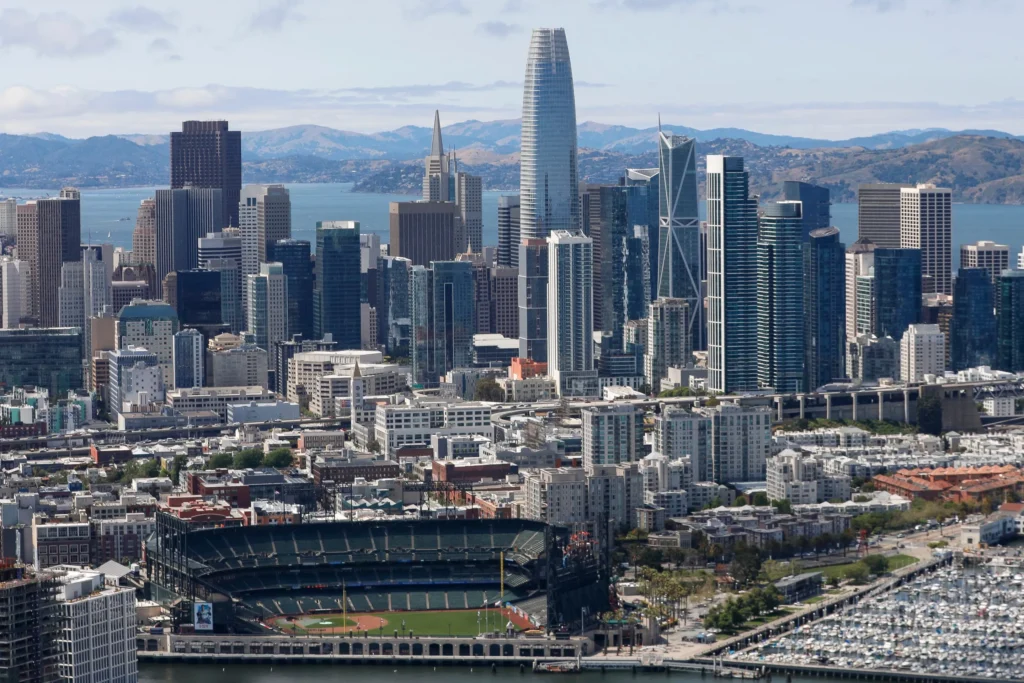
The Rise of Silicon Valley 2.0: Innovation Beyond San Francisco
For decades, Silicon Valley symbolized the epicenter of global innovation — anchored by cities like San Francisco and San Jose. It produced giants such as Apple, Google, and Meta, setting the global standard for startup culture, venture capital, and technological ambition.
But by 2026, a new chapter has emerged.
Silicon Valley has not disappeared — it has decentralized. The rise of “Silicon Valley 2.0” reflects a broader geographic redistribution of innovation across the United States. Driven by remote work, lower costs, state-level incentives, and evolving founder priorities, tech ecosystems are thriving far beyond Northern California.
This is the story of America’s new innovation map.
1. Why Innovation Is Moving Beyond the Bay Area
Several structural shifts have accelerated this transition:
1. Cost Pressures
High real estate prices, taxes, and operational expenses in the Bay Area pushed startups and even large firms to seek alternatives.
2. Remote Work Normalization
The post-2020 workforce shift proved that high-skilled collaboration could happen anywhere. Engineers, designers, and founders are no longer bound to one ZIP code.
3. Talent Dispersion
Top-tier universities and technical talent exist nationwide. Innovation clusters have grown around local research institutions and corporate hubs.
4. State-Level Incentives
States now aggressively court tech investment through tax credits, infrastructure programs, and workforce development initiatives.
Silicon Valley’s network effects remain powerful — but geography is no longer destiny.
Emerging Tech Hubs in 2026
2. Austin, Texas – The AI & Startup Magnet
Austin has become one of the most visible beneficiaries of tech migration.
Why Austin?
- No state income tax
- Strong startup culture
- Expanding AI and semiconductor presence
- Lower cost of living relative to California
Major companies including Tesla have expanded operations there, reinforcing Austin’s reputation as a high-growth innovation hub.
AI startups, defense tech firms, and crypto companies have also clustered in the region.
3. Miami, Florida – The Fintech & Web3 Gateway
Miami has positioned itself as a global fintech and digital asset center.
With strong support from local leadership and international connectivity, Miami attracts:
- Crypto startups
- Venture funds
- Latin American tech founders
- Fintech platforms
Its appeal lies in tax advantages, lifestyle, and global financial positioning.
4. Seattle, Washington – Cloud & AI Powerhouse
Seattle continues to grow as a cloud computing and AI stronghold.
Home to industry leaders like Amazon and Microsoft, Seattle anchors a robust ecosystem of AI research, enterprise software, and cloud infrastructure startups.
The region benefits from:
- Deep technical talent pools
- Strong university pipelines
- Mature venture capital networks
Seattle exemplifies how established hubs are evolving rather than declining.
5. New York City – The Fintech & Media Tech Capital
New York City blends finance, media, and technology in a uniquely powerful way.
In 2026, NYC leads in:
- Fintech innovation
- AdTech and media platforms
- AI-driven financial analytics
- Digital commerce
Wall Street’s integration with AI-powered trading, fraud detection, and risk modeling strengthens New York’s competitive edge.
6. Boston, Massachusetts – Biotech & Robotics Leadership
Boston stands out in biotech, health tech, and robotics.
Driven by academic research ecosystems and medical institutions, Boston supports:
- AI-powered drug discovery
- Precision medicine startups
- Advanced robotics firms
The convergence of life sciences and AI makes Boston a strategic innovation center in 2026.
7. Denver, Colorado – Climate & Aerospace Innovation
Denver has emerged as a climate tech and aerospace hub.
Startups in:
- Renewable energy
- Grid optimization
- Space technology
- Satellite systems
are finding funding and talent in the region.
Colorado’s quality of life and outdoor culture also attract younger tech professionals.
8. Atlanta, Georgia – Fintech & Cybersecurity Growth
Atlanta is rapidly growing in fintech and cybersecurity.
With strong payment-processing roots and expanding cybersecurity firms, Atlanta’s tech workforce is diversifying beyond traditional sectors.
Major universities and corporate partnerships support sustained ecosystem growth.
The Structural Shift: From One Valley to Many
The rise of Silicon Valley 2.0 is not about replacing Northern California — it’s about multiplying innovation nodes across America.
Key characteristics of this new model:
• Distributed Talent
Teams are geographically dispersed but digitally connected.
• Hybrid Headquarters
Companies maintain smaller physical footprints while leveraging national hiring strategies.
• Sector Specialization
Each city develops strengths (AI, biotech, fintech, aerospace, energy) rather than replicating Silicon Valley exactly.
• Venture Capital Expansion
VC firms increasingly invest outside California, opening regional offices and funding local founders.
The Role of AI in Decentralization
Artificial intelligence tools have accelerated geographic flexibility.
Cloud-based AI infrastructure enables:
- Remote collaboration
- Automated workflows
- Global product distribution
- Lower startup operating costs
A founder in Denver or Atlanta now has access to the same AI capabilities once concentrated in Silicon Valley.
Challenges Facing Emerging Tech Hubs
Despite growth, these new ecosystems face hurdles:
- Scaling local venture capital availability
- Maintaining long-term talent pipelines
- Avoiding rising housing costs
- Competing for large enterprise headquarters
Sustainable ecosystem development requires infrastructure, policy alignment, and continued capital investment.
Is Silicon Valley Still Relevant?
Yes — but differently.
The Bay Area remains:
- A global venture capital hub
- A center for frontier AI research
- Home to major tech headquarters
- A magnet for elite founders
However, innovation is no longer monopolized by one region.
Silicon Valley has evolved from a geographic place into a mindset — one now shared nationwide.
Conclusion: The American Innovation Map Is Expanding
In 2026, the United States no longer revolves around a single technology corridor. Instead, it operates as a network of specialized, interconnected innovation ecosystems.
Silicon Valley 2.0 represents:
- Geographic diversification
- Broader talent inclusion
- Lower barriers to entry
- Increased regional competition
The future of American innovation is not confined to one valley — it is distributed across cities, states, and digital networks nationwide.
The next billion-dollar startup might emerge from Austin, Miami, Boston, or Atlanta — and scale globally from day one.
Innovation in America has become borderless.